
The right hospital is not simply the one that offers cancer surgery or owns advanced equipment. You need to verify its experience with your exact cancer and operation, confirm that the full treatment team agrees on the plan, and compare outcomes, backup services, risks, and recovery support before consenting.
Key takeaways
- Match the hospital to your cancer site, stage, and proposed operation.
- Request operation-specific outcomes, complication rates, and intensive care backup.
- Ask how surgery will affect eating, movement, work, and long-term follow-up.
- Get a written second-opinion comparison before choosing your treatment team.
Match the hospital to your cancer, stage, and operation
Start by matching the hospital to your cancer type and stage, not to its general reputation. Confirm that its specialists regularly treat the tumour’s anatomical site and the proposed surgical complexity, such as a pancreaticoduodenectomy, esophagectomy, major liver resection, or rectal cancer operation.
Ask the hospital to provide or explain:
- The biopsy review, imaging findings, and staging method supporting the diagnosis.
- Whether a multidisciplinary tumour board reviews your case before scheduling surgery.
- Which cancer surgeon, medical oncologist, radiation oncologist, radiologist, pathologist, anesthesiologist, intensivist, and reconstructive surgeon will participate.
- The team’s recent annual volume for your exact operation, separate from its total robotic or cancer-surgery volume.
- The surgeon’s conversion-to-open rate for minimally invasive cases, complication rate, readmission rate, and mortality rate for that procedure.
- Whether specialist gastrointestinal or hepatobiliary pathology review is available for difficult biopsy or resection specimens.
- Whether the hospital provides 24-hour critical care, interventional radiology, therapeutic endoscopy, nutrition, physiotherapy, and blood-bank support.
Accreditation can confirm that a cancer programme has specified structures and processes, but it does not prove superior results for your operation. Ask where postoperative sepsis, bleeding, or organ failure would be treated; a hospital that transfers these emergencies may show a deceptively low complication rate.
Also ask what finding would change the plan, because chemotherapy, immunotherapy, or radiation may need to come before surgery.
Confirm the diagnosis, staging, and treatment sequence
Do not schedule an irreversible cancer operation until a multidisciplinary tumor board has agreed on the diagnosis, stage, and treatment order. Ask whether it includes a cancer surgeon, medical oncologist, radiation oncologist, radiologist and pathologist, with gastroenterology, anaesthesia, intensive care and specialist nursing added when relevant.
The team should record what finding would change the plan.
Check that the file contains:
- The biopsy diagnosis, with difficult gastrointestinal or hepatobiliary cases sent for specialist pathology review.
- Contrast CT or MRI, relevant endoscopy, and a written stage explaining tumour spread and resectability.
- Molecular or genetic results when they affect immunotherapy, targeted treatment, or inherited-risk assessment.
| Option | What it means | When it applies |
|---|---|---|
| Surgery first | Operation precedes drug or radiation treatment | Selected, clearly resectable disease |
| Preoperative therapy | Chemotherapy, immunotherapy or radiation comes before surgery | Tumours needing shrinkage or biologic risk reduction |
| Nonoperative initial plan | Definitive chemoradiation or systemic therapy without immediate surgery | Unresectable, metastatic, or organ-preserving situations |
Get a second opinion when the operation is unusually extensive, irreversible, experimental, or disputed. Send the second centre the actual scans, pathology slides or blocks, operative proposal, and molecular results, not merely a summary letter. Confirm who will reassess margins, lymph nodes, and treatment response after resection.
Ask for operation-specific outcomes and complication backup
Ask for the team’s annual procedure volume for your exact operation, not the hospital’s total cancer, robotic, or minimally invasive caseload. A surgeon who performs 20 pancreaticoduodenectomies is not assessed by the same evidence as one who performs 20 unrelated procedures. For minimally invasive surgery, request the conversion-to-open rate and ask why conversions occurred.
Request risk-adjusted outcomes for that operation over the last three years, with results separated by surgeon or team where possible. In-hospital mortality alone misses problems that appear after discharge, so ask for 30-day and 90-day mortality, major complications, unplanned reoperation, readmission, prolonged ICU use, and emergency transfer.
Ask these questions before consenting:
- Who is the named consultant responsible for my operation, and who performs its key steps?
- If trainees participate, what will they do, and what supervision will be present?
- Who covers surgical complications overnight and at weekends?
- Does the hospital provide 24-hour ICU care, interventional radiology, therapeutic endoscopy, specialist pathology, blood-bank support, nutrition, physiotherapy, and emergency reoperation?
- If a leak, bleeding, sepsis, or organ failure occurs, will treatment happen here or require transfer?
Rescue capacity matters as much as the initial complication rate. A centre that detects deterioration early and can deploy experienced ICU, endoscopy, radiology, and reoperation teams may prevent a complication from becoming fatal. Cancer accreditation confirms specified structures and processes; it does not prove superior results for your particular operation.
Understand the operation and its effect on daily life
Ask the surgical team to explain the operation as a change to your body and routine, not only by its technical name. Get these points in writing:
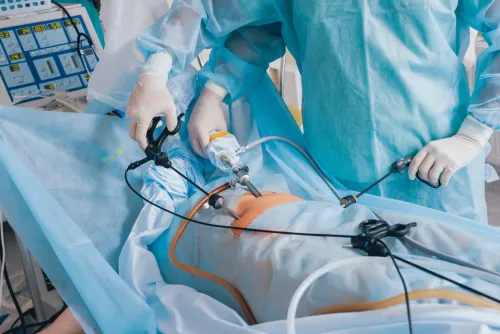
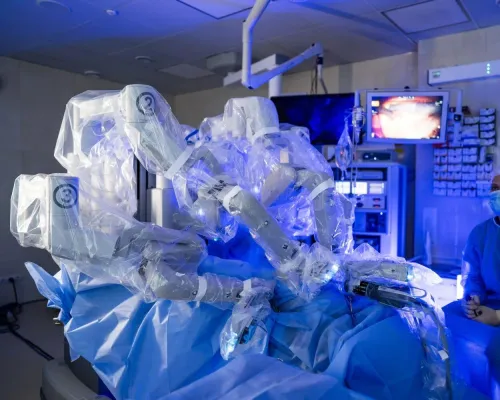
- Whether the approach is open, laparoscopic, or robotic, why it suits your tumour, and what could require conversion to open surgery.
- Which organ or part of an organ will be removed, and whether nearby structures might also need removal.
- Whether the operation includes lymph-node dissection, how many nodes the team expects to examine, and how the result affects further treatment.
- The margin goals: how much healthy tissue the surgeon plans to remove around the tumour and what happens if cancer reaches an edge.
- Whether reconstruction is needed, who performs it, and how it could affect eating, digestion, speech, movement, or appearance.
Ask directly about stoma risk. Find out whether a temporary or permanent stoma is possible, how it is managed, and whether you will meet a stoma nurse before surgery.
Clarify the chance of intensive-care admission, expected ICU duration, ventilation, feeding support, and treatment for bleeding, infection, or organ failure. Confirm that the hospital can provide these services without transferring you elsewhere.
Request a recovery plan covering hospital stay, pain control, drains, wound care, diet, physiotherapy, driving, work, sexual function, and follow-up. Ask which symptoms require an emergency call after discharge and when the final pathology review will change your next treatment.
Use second opinions and a written comparison before deciding
Get a second opinion before an irreversible operation, an unusually extensive procedure, an experimental approach, or conflicting recommendations. Send the second centre your scans, pathology slides or blocks, operative proposal, and genetic or molecular results—not just a summary letter.
| Factor | Hospital A | Hospital B | What to verify |
|---|---|---|---|
| Hospital accreditation | Name and current scope | Name and current scope | Confirm the certificate covers the facility and relevant services |
| Specialist coverage | Named cancer surgeon, oncologist, radiologist, pathologist, anesthesiologist, intensivist | Same roles, with substitutes | Ask whether these specialists review your case together |
| Recovery pathway | Enhanced Recovery After Surgery protocol | Enhanced Recovery After Surgery protocol | Check nutrition, anemia treatment, fasting, pain control, clot prevention, feeding, mobilisation, and discharge support |
| Results | Risk-adjusted 30- and 90-day data | Risk-adjusted 30- and 90-day data | Compare major complications, death, reoperation, readmission, prolonged ICU care, and emergency transfer |
Do not choose the shortest advertised stay as the winner. A rapid discharge without specialist nursing, dietetic input, rehabilitation, or clear follow-up can lead to an avoidable readmission.
Take these questions to each centre, including Sai Vedant Multi-Speciality Hospital:
- Who leads the multidisciplinary tumour board, and what decision would change the proposed sequence?
- Who reviews difficult pathology, including margins and lymph nodes?
- What is the exact operation volume, conversion-to-open rate, and complication rate?
- Which specialist nursing, nutrition, stoma, fertility, or rehabilitation services continue after discharge?
- What symptoms require an emergency call, and who answers it at night?
Frequently asked questions
How do I match a hospital to my cancer surgery?
Check whether the hospital regularly treats your cancer type, tumour location, stage, and operation. Ask about experience with procedures such as pancreaticoduodenectomy, esophagectomy, major liver resection, or rectal cancer surgery.
What diagnosis and staging details should I confirm before surgery?
Request your pathology report, imaging reports, biopsy results, clinical stage, and treatment plan. Confirm whether chemotherapy, radiotherapy, immunotherapy, or surgery comes first and why.
Which hospital outcomes should I compare?
Ask for outcomes specific to your operation, including mortality, major complications, readmissions, reoperation rates, length of stay, and intensive care access. Ask who manages bleeding, leaks, infection, or organ failure if they occur.
What should I ask about daily life after cancer surgery?
Ask how the operation could affect eating, bowel or bladder function, mobility, pain, body image, work, sexual health, and follow-up treatment. Request expected recovery milestones and warning signs that need urgent care.
When should I get a second opinion?
Get one before treatment when the operation is complex, the diagnosis is uncertain, the proposed surgery is irreversible, or different treatment sequences are possible. Compare both opinions in writing.