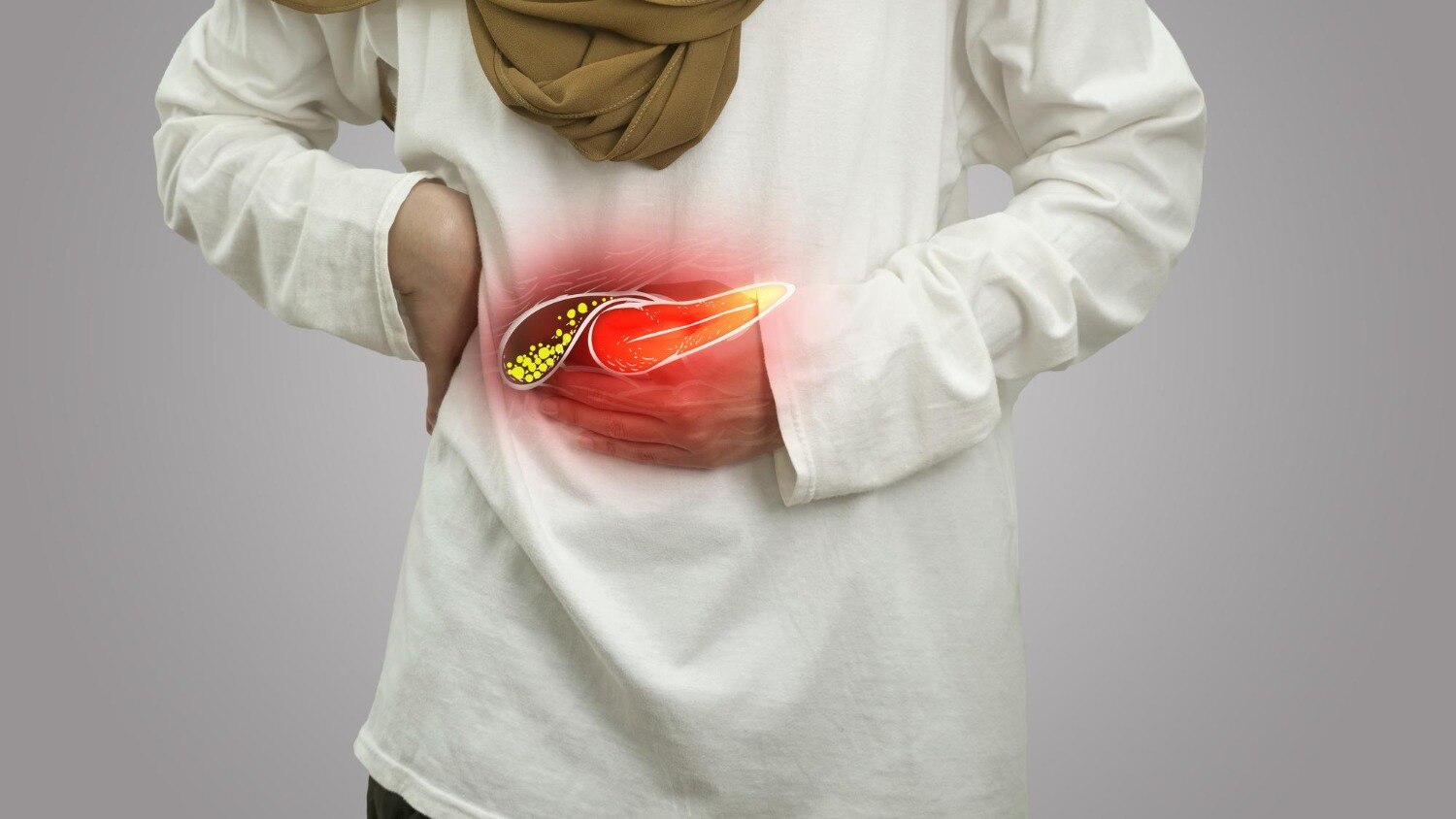
Repeated pain beneath the right ribs is not always a simple gallstone attack, and fever, jaundice, vomiting or pain spreading to the back can signal a complication that needs urgent assessment. You will learn how doctors identify the problem, when gallbladder removal is appropriate, how bile-duct stones are treated, and what the main surgical options involve.
Key takeaways
- Persistent pain, fever and tenderness can signal acute cholecystitis.
- Ultrasound checks the gallbladder; MRCP or EUS can find bile-duct stones.
- Gallbladder removal prevents recurrent attacks but does not remove bile-duct stones.
- ERCP clears a bile-duct stone; surgery removes the gallbladder separately.
How Gallstones Turn Into Recurrent Pain or an Emergency
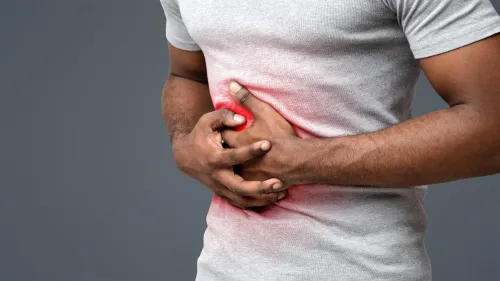
A stone that blocks the gallbladder outlet briefly causes biliary colic: steady right-upper-abdominal or upper-central pain lasting 30 minutes to several hours, often after a meal. The stone then moves away, so pain settles without infection. If it remains lodged, trapped bile inflames the gallbladder, causing acute cholecystitis with persistent pain, tenderness and often fever.
| Condition | What the stone does | Typical urgency |
|---|---|---|
| Biliary colic | Briefly blocks the gallbladder outlet | Medical review for recurrent attacks |
| Acute cholecystitis | Stays lodged, causing gallbladder inflammation | Prompt assessment, often hospital treatment |
| Choledocholithiasis | Enters and blocks the common bile duct | Urgent evaluation, especially with jaundice |
| Ascending cholangitis | Bile-duct blockage plus bacterial infection | Emergency treatment |
| Gallstone pancreatitis | Blocks near the pancreatic duct, inflaming the pancreas | Emergency assessment |
Choledocholithiasis can cause dark urine, pale stools and yellow skin or eyes. When infection rises through the blocked duct, ascending cholangitis can rapidly become life-threatening. A stone lodged at the pancreatic outlet can cause severe upper-abdominal pain radiating to the back and repeated vomiting.
Seek emergency assessment for persistent or worsening right-upper-quadrant pain, fever or chills, jaundice, repeated vomiting, dark urine, pale stools, abdominal rigidity, confusion, faintness, or pain radiating to the back. These gallstones symptoms need faster evaluation than brief, settled discomfort.
How Doctors Confirm Gallstones and Find a Bile-Duct Stone
An abdominal ultrasound gallstones scan is usually the first imaging test. It can show stones, gallbladder-wall thickening, surrounding fluid and an enlarged common bile duct, but it may miss a stone lodged inside that duct. Doctors combine the scan with blood tests and symptoms:
| Test | What it helps distinguish | When it is used |
|---|---|---|
| Ultrasound | Gallstones, inflammation and duct enlargement | First test for suspected gallstone disease |
| Liver-function tests | Bile-duct obstruction, especially raised bilirubin, alkaline phosphatase and GGT | Alongside ultrasound; abnormal results increase concern for a duct stone |
| Complete blood count | Infection or inflammation through a raised white-cell count | Fever, persistent pain or suspected acute cholecystitis or cholangitis |
| Serum lipase | Pancreatic inflammation; a marked rise supports gallstone pancreatitis | Upper-abdominal pain, especially when it reaches the back or causes vomiting |
| MRCP | Non-invasive images of the bile and pancreatic ducts | Dilated duct, abnormal liver-function tests or intermediate risk of a duct stone |
| EUS | Close ultrasound views that can detect small duct stones | When MRCP is unsuitable, unclear or negative despite continuing suspicion |
| ERCP | Direct duct treatment, including stone extraction or drainage | Cholangitis or persistent obstruction; it is not routine diagnosis because it can cause pancreatitis, bleeding, infection or perforation |
Normal blood tests and a normal-sized duct support uncomplicated gallstones. After gallstone pancreatitis, urgent ERCP is unnecessary without cholangitis or ongoing obstruction.
When Recurrent Pain Makes Gallbladder Removal the Better Choice
Choose laparoscopic cholecystectomy when ultrasound-confirmed stones cause recurrent, typical biliary pain: steady right-upper-abdominal or epigastric pain lasting at least 30 minutes, often for hours. Diet changes may reduce triggers but do not remove the gallbladder, so new stones and further attacks remain possible.
This is the usual basis for recurrent gallstone pain surgery and the main group covered by laparoscopic cholecystectomy indications.
| Situation | Usual approach | Timing and reason |
|---|---|---|
| Recurrent typical biliary pain | Laparoscopic cholecystectomy | Elective surgery after assessment; it prevents further attacks better than observation |
| Acute calculous cholecystitis | Laparoscopic cholecystectomy | Early surgery during the same admission, commonly within 7 days; waiting can prolong inflammation and increase repeat complications |
| Asymptomatic gallstones | Observation | No operation for incidental stones without symptoms; discuss selected exceptions such as certain polyps or porcelain-gallbladder patterns |
| Mild gallstone pancreatitis | Laparoscopic cholecystectomy | During the same admission after stabilisation, reducing the risk of another pancreatitis episode |
Gallstone pancreatitis does not automatically require urgent ERCP. ERCP is used when cholangitis or continuing common-bile-duct obstruction is present; the gallbladder operation treats the source afterward.
Do not blame vague bloating, reflux or brief indigestion on stones without checking another diagnosis. Those symptoms can persist after surgery. Severe or persistent pain, fever, jaundice, repeated vomiting or pain radiating to the back needs urgent assessment rather than elective scheduling.
What Surgery Removes—and What ERCP Must Treat Separately
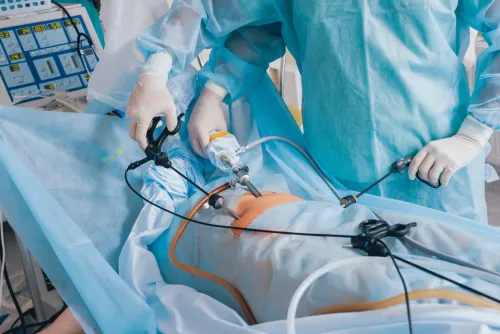
The laparoscopic versus open cholecystectomy decision concerns access to the gallbladder, not whether stones are “washed out.” Laparoscopic surgery uses small abdominal incisions and a camera; open surgery uses one larger incision.
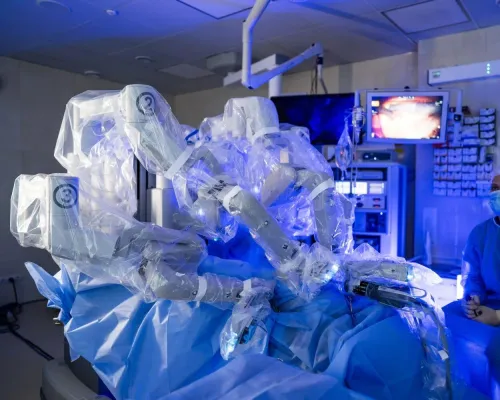
Robotic cholecystectomy uses robotic instruments controlled by the surgeon through small incisions, offering wristed movement but adding equipment, time and cost without guaranteeing better results.
| Option | How it is performed | Typical implication |
|---|---|---|
| Laparoscopic | Camera and instruments through small incisions | Shorter recovery and often same-day or brief admission |
| Open | Gallbladder removed through a larger incision | Longer hospital stay and recovery |
| Robotic-assisted | Robotic instruments through small incisions | Similar access to laparoscopy with different equipment and trade-offs |
Removing the gallbladder does not remove a common bile duct stone because the gallbladder and common bile duct are separate structures. A retained or obstructing duct stone needs common bile duct stone ERCP, in which an endoscope reaches the opening of the bile duct and instruments extract the stone or place a stent.
ERCP treats a suspected obstruction; it is not a routine diagnostic test for every gallstone patient because it can cause pancreatitis, bleeding, infection or perforation.
Before dividing the cystic duct or artery, the surgeon must obtain the critical view of safety: only the cystic duct and cystic artery should enter the gallbladder, with the lower gallbladder separated from the liver. Cholangiography or laparoscopic ultrasound can clarify uncertain anatomy or detect duct stones, but cannot replace this view.
Severe scarring may require subtotal removal, drainage or conversion to open surgery. Conversion is a protective safety decision, not automatically a complication.
What to Settle Before Surgery and What Recovery Really Involves
Before surgery, settle the practical risks, not just the operation date. Your team will give exact gallbladder surgery fasting instructions; these often allow clear liquids until two hours before anaesthesia and stop solid food six to eight hours earlier. Bring every prescription, supplement and allergy record.
- Review anticoagulants before surgery; never stop warfarin, apixaban, rivaroxaban, aspirin or clopidogrel without the prescribing clinician’s plan.
- Confirm diabetes management before anaesthesia, including insulin or tablet adjustments and glucose checks.
- Tell the anaesthetist about sleep apnoea, heart or lung disease, previous anaesthesia problems and the possibility of pregnancy.
- Carry ultrasound, liver-function, complete blood count and lipase reports, plus MRCP, EUS or ERCP findings when performed.
Uncomplicated laparoscopic surgery often means discharge the same day or after one night. Cholecystitis, pancreatitis, a bile-duct stone, major illness or a difficult operation can extend admission.
| Approach | Recovery expectation | Trade-off |
|---|---|---|
| Laparoscopic | Smaller wounds and shorter recovery | Safe anatomy still matters |
| Robotic-assisted | Similar basic operation and recovery | No consistent outcome advantage; equipment can cost more and take longer |
| Open surgery | Larger incision and longer recovery | May be the safest option in severe scarring or inflammation |
Ask Sai Vedant Multi-Speciality Hospital’s surgical team how they confirm the critical view of safety and which bailout plan they use if anatomy is unclear.
Most people resume a normal diet, but start with a light gallbladder surgery recovery diet if fatty meals trigger discomfort. Temporary loose stools or urgency can occur; persistent, severe or bloody diarrhoea needs assessment.
Related services
Complex GI & General Surgeries Complex GI & General Surgeries Complex GI & General Surgery at Sai Vedant Multispeciality Hospital, Pune Sai Vedant Multispeciality Hospital provides advanced gastrointestinal (GI)... View service → |
Robotic Surgeries Robotic Surgery at Sai Vedant Multispeciality Hospital, Pune Sai Vedant Multispeciality Hospital offers advanced robotic surgery solutions designed... View service → |
Frequently asked questions
How do gallstones cause recurrent pain or an emergency?
A stone briefly blocking the gallbladder outlet causes steady biliary-colic pain lasting 30 minutes to several hours. A stone that remains trapped can cause acute cholecystitis with persistent pain, tenderness and often fever.
How are gallstones and bile-duct stones confirmed?
Doctors use symptoms, examination and imaging such as abdominal ultrasound. MRCP or endoscopic ultrasound can assess the bile duct when a duct stone is suspected.
When is gallbladder removal recommended for recurrent pain?
Recurrent symptomatic attacks, acute cholecystitis and gallstone complications are reasons to discuss laparoscopic gallbladder removal with a surgeon.
Does gallbladder surgery remove a stone in the bile duct?
No. Gallbladder removal treats the gallbladder and its stones. ERCP is used separately to locate and remove a stone lodged in the common bile duct.
Related service
General Surgeries General Surgery at Sai Vedant Multispeciality Hospital, Pune At Sai Vedant Multispeciality Hospital, Pune, our General Surgery department provides... View service → |