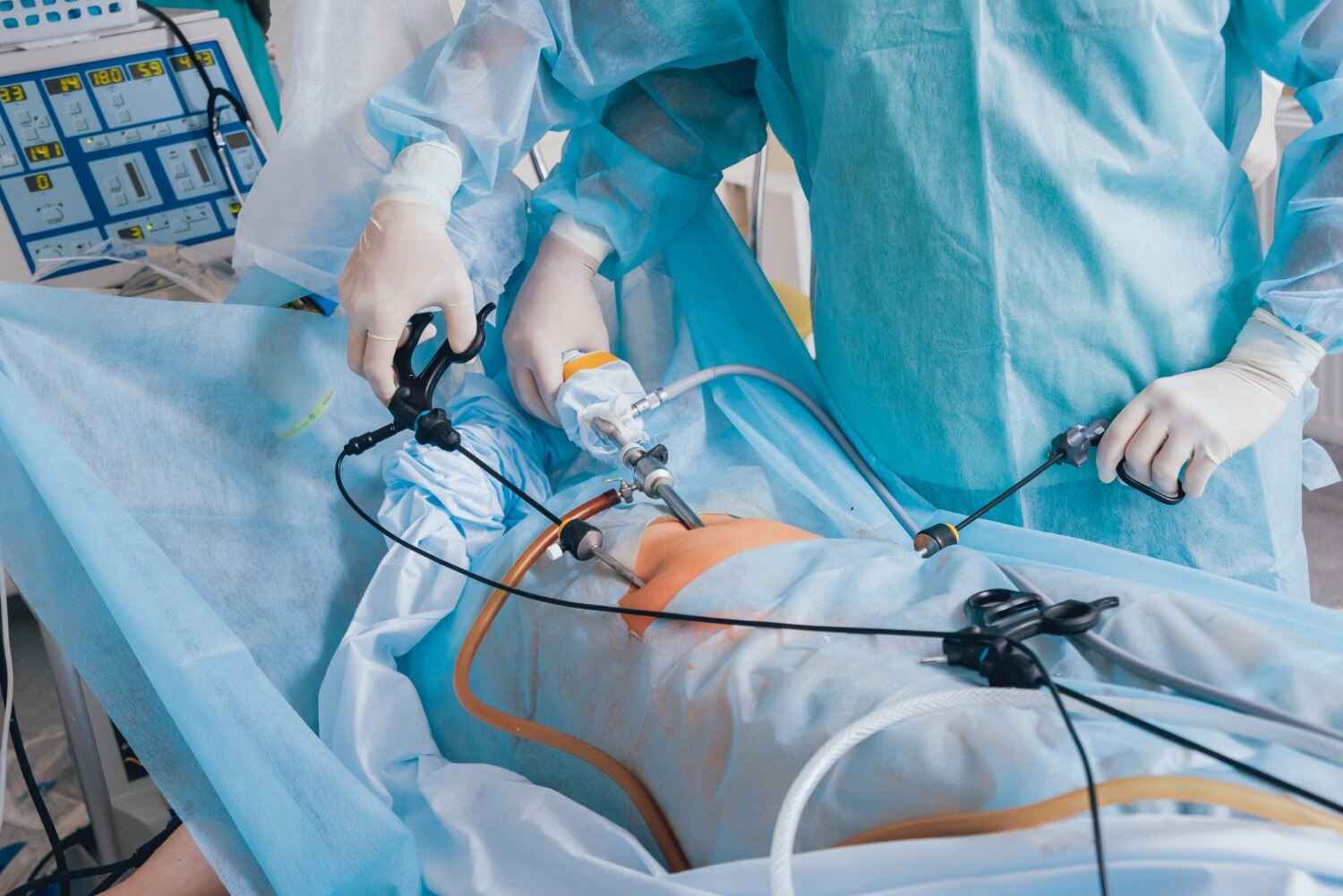
Small skin openings can reduce damage to the abdominal or chest wall, but they do not make every operation minor or guarantee a quick return to normal activity. You will learn how laparoscopic, robotic, and thoracoscopic access works, what recovery measures to compare, and when open surgery may be the safer choice.
Key takeaways
- Small ports can reduce wound size, but recovery depends on the operation.
- Ask why minimally invasive access is safe for your specific condition.
- Choose open surgery when visibility, access, or bleeding control requires it.
- Follow movement, wound-care, and warning-sign instructions after discharge.
What Minimally Invasive Surgery Changes at the Incision
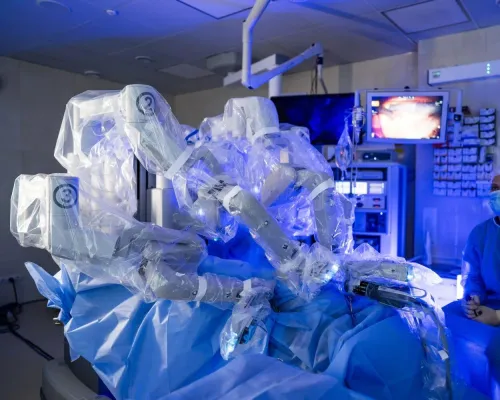
Minimally invasive surgery reaches the treatment area through several small ports rather than one long opening. In laparoscopic surgery or robotic surgery, a camera and long instruments pass through abdominal ports; carbon dioxide inflates the abdomen during many operations, creating working space.
Thoracoscopic surgery uses similar camera-guided access through ports between the ribs for chest procedures.
| Open surgery | Usually uses one larger incision directly over the operative area | The wound may be longer, but its total length cannot be compared without knowing the operation |
|---|---|---|
| Minimally invasive surgery | Uses several port incisions and a camera view | The combined wound length is often smaller, but not always |
| Robotic surgery | Uses a robot-controlled version of port-based minimally invasive access | The robot does not automatically mean fewer ports, smaller wounds, or faster recovery |
There is no universal incision size or port count. The operation, your anatomy, the specimen’s size, and the extraction route determine the pattern; a port may need enlargement to remove tissue. Surgeons close the openings with sutures, staples, or skin adhesive.
Robotic surgery is one method of minimally invasive surgery, alongside laparoscopy and thoracoscopy. Several small wounds can reduce abdominal- or chest-wall disruption, wound tension, and wound-care effort, but they still create multiple healing sites. The total skin length is not guaranteed to be less than a single open incision.
How Smaller Access Points Can Support Recovery—and What They Cannot Tell You
Reduced abdominal-wall or chest-wall disruption lowers wound tension and limits tissue trauma. For many procedures, that means less early postoperative pain, fewer wound complications, earlier movement, and less dressing and wound-care work. These benefits can support faster recovery after surgery, but they do not guarantee it.
Carbon-dioxide pneumoperitoneum adds separate effects during many abdominal laparoscopic operations. It can temporarily change breathing mechanics and venous return, then cause shoulder-tip pain after surgery.
Recovery is better compared using several measures, not one universal timeline.
| Measure | What to compare |
|---|---|
| Hospital stay | Discharge criteria and expected length of hospital stay |
| Movement | Time to sit up and walk safely |
| Bowel function | Return of gas, eating, and bowel movements |
| Daily care | Showering and wound-care instructions |
| Driving and work | Clearance for driving and desk work |
| Physical load | Restrictions on lifting and exercise |
| Follow-up | Timing, wound review, and whom to contact |
Enhanced Recovery After Surgery pathways can support recovery after both open and minimally invasive operations. Shorter fasting, nausea prevention, opioid-sparing pain relief, early eating when safe, breathing exercises, and mobilisation all matter.
Small wounds cannot reveal the full workload of an operation. Internal dissection, anaesthesia, complications, nutrition, fitness, disease extent, and adherence to restrictions can prolong recovery even when the skin looks healed. A shorter hospital stay or earlier walking also does not mean complete internal healing.
When Minimally Invasive Access Fits—and When Open Surgery Is Safer
Minimally invasive access fits when the procedure is routinely performed laparoscopically, robotically, or thoracoscopically, you can tolerate the anaesthesia and positioning, and the surgeon can achieve the treatment goal safely. The choice in laparoscopic versus open surgery is therefore a question of surgical suitability, not incision size alone.
Suitability depends on:
- Body size, cardiopulmonary fitness, heart or lung disease, smoking, diabetes, and blood-thinner use
- Previous abdominal or chest operations and the likelihood of adhesions
- Tumour location, size, and local spread
- The surgeon’s experience with that exact procedure and the team’s ability to manage complications
Open surgery or conversion to open surgery may be safer when anatomy is unclear, bleeding cannot be controlled, adhesions are extensive, local disease is advanced, the specimen is very large, emergency findings change the plan, or visibility and instrument access are inadequate.
Conversion is a safety decision, not automatically a planning failure or a failed operation.
Minimally invasive surgery also has trade-offs: longer operating time, specialist equipment, anaesthesia risks, bleeding, infection, trocar injury, and port-site hernia. Some procedures or experienced teams are not available everywhere. Robotic access can improve instrument control and visibility, but it does not guarantee fewer ports or faster recovery.
For appropriately selected colorectal cancer patients, laparoscopic surgery can support shorter-term recovery while preserving long-term cancer outcomes. Tumour, patient, and team factors still determine whether it is appropriate.
What to Compare Before Choosing a Surgical Approach
Compare the planned operation, not just the size of its skin cuts. The right hospital comparison weighs technical suitability, safety, surgeon experience, complication management, and recovery support.
Use these questions to ask a surgeon:
- Which approach do you recommend, and why?
- How many incisions and ports will I have?
- What total wound length do you expect?
- Where will the scars be placed?
- Will you use a drain, and when would you remove it?
- How will you remove the specimen? Will an incision need enlargement?
- What is the chance of conversion to open surgery?
- How many times have you performed this exact operation, and what are your results and complication rates?
- How long might I stay in hospital?
- When can I walk normally, drive, work, lift objects, and exercise?
- Who handles pain, wound problems, and urgent questions after discharge?
| Approach | What to compare | Important limitation |
|---|---|---|
| Open | One larger access incision and direct access | Often greater wound disruption, but may provide safer access for extensive disease or difficult anatomy |
| Laparoscopic | Several ports, camera guidance, and possible specimen-extraction incision | Port count and total wound length vary by operation |
| Robotic | Laparoscopic-style ports with robot-controlled instruments | The word robotic alone does not prove fewer incisions, less pain, or faster recovery |
Ask to review the hospital’s postoperative care protocol for pain relief, mobilisation, follow-up, and complication management. In Pune, Sai Vedant Multi-Speciality Hospital belongs in a hospital comparison only after you ask these operation-specific questions.
Related service
Robotic Surgeries Robotic Surgery at Sai Vedant Multispeciality Hospital, Pune Sai Vedant Multispeciality Hospital offers advanced robotic surgery solutions designed... View service → |
The Work of Recovery Continues After You Leave Hospital
A smaller incision does not eliminate preparation. Preoperative testing, fasting, medication instructions, transport home, and a responsible adult for the first period after discharge still matter in minimally invasive surgery recovery.
At home, walk short distances early and increase them as instructed. After chest or abdominal surgery, perform the prescribed breathing exercises. Take prescribed pain relief rather than waiting until pain becomes severe, observe the wounds daily, and follow the surgeon’s instructions for keeping dressings dry and deciding when to shower.
Keep the scheduled follow-up, even if the wounds look clean.
Use these postoperative warning signs to decide when to contact a surgeon:
- Contact the surgical team urgently for fever, pain that is worsening instead of improving, spreading redness, pus, wound separation, persistent vomiting, increasing abdominal swelling, breathlessness, or calf swelling.
- Seek emergency assessment for severe breathlessness, chest pain, fainting, heavy bleeding, or sudden deterioration.
Routine questions about bruising, medicines, showering, or activity can usually wait for the practice’s advice line or planned review; do not delay urgent calls while seeking routine guidance.
Returning to desk work or normal walking does not prove complete internal healing. Follow surgeon-set lifting and exercise limits, not the apparent size of the wounds. Smaller incisions often reduce wound trauma, but the operation, disease, complications, baseline fitness, nutrition, and adherence to restrictions determine the full recovery.
Frequently asked questions
How does minimally invasive surgery change the incision?
It uses several small ports for a camera and instruments instead of one long opening. Laparoscopic procedures often use carbon dioxide to create working space inside the abdomen.
Do smaller incisions guarantee faster recovery?
No. Recovery also depends on the operation, anaesthesia, complications, pain control, your health, and how closely you follow aftercare instructions.
When is open surgery safer than minimally invasive surgery?
Open surgery may be safer when the surgeon needs wider access, better visibility, rapid bleeding control, or a larger route to remove or repair tissue.
What should you compare before choosing a surgical approach?
Compare the surgeon’s recommended approach, expected benefits and risks, conversion-to-open possibility, incision locations, hospital stay, recovery restrictions, and follow-up plan.