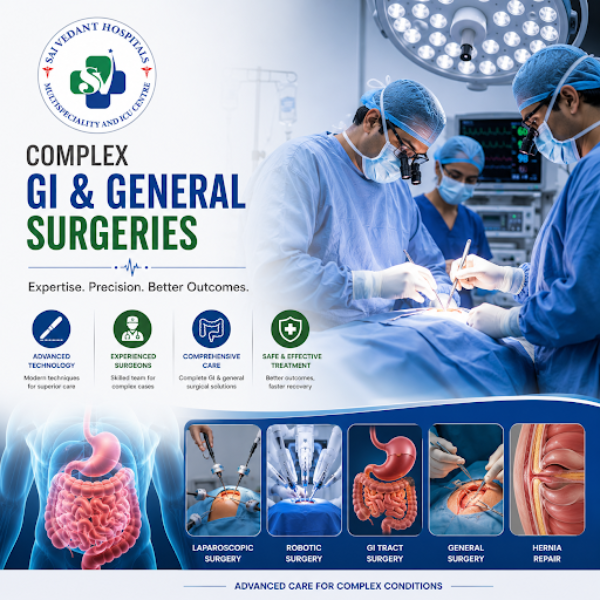
Some surgical problems are straightforward enough to follow a relatively predictable pathway. Others involve multiple organs, previous operations, serious infection, cancer, nutritional challenges, or medical conditions that increase the complexity of treatment.
In these situations, Complex GI and General Surgery may require broader planning than a routine surgical admission.
For patients in Pune, knowing what makes a case complex can help when choosing an appropriate hospital setting.
What Can Make Gastrointestinal Surgery Complex
Complexity is not determined by the size of an incision alone.
A gastrointestinal operation may become more demanding because of:
- Cancer involving nearby structures
- Previous abdominal surgery and internal adhesions
- Significant inflammation or infection
- Bowel obstruction
- Perforation
- Multiple medical conditions
- Poor nutritional status
- Need for extensive reconstruction
- Higher anaesthetic risk
- Potential requirement for postoperative critical care
Two people with the same broad diagnosis can therefore require very different levels of surgical support.
Planning Should Begin With the Whole Patient
A complex operation requires assessment of more than the affected organ.
The team may need to evaluate heart and lung function, diabetes control, kidney function, nutritional condition, anaemia, current medications, infection risk, and previous surgical history.
Correcting or optimizing relevant medical issues before surgery may form an important part of preparation when time and the clinical condition permit.
Diagnostic Information Shapes the Operation
Imaging, endoscopy, pathology, laboratory investigations, and physical examination can help surgeons understand the disease before operating.
In cancer-related gastrointestinal surgery, the extent of disease and relationship to surrounding structures may influence whether surgery is appropriate, what technique is used, and whether additional treatment is needed before or after the procedure.
Patients should be given a realistic explanation of what is planned and what findings could alter the operation.
Critical Care Readiness Can Matter
Most surgical patients do not automatically require intensive care. However, selected high-risk patients may need closer monitoring after a major operation.
This is one reason hospital capability matters when evaluating complex surgical treatment. Access to anaesthesia, physicians, diagnostics, blood testing, imaging, critical care, and trained nursing support can become important if the clinical situation changes.
Sai Vedant Multi-Speciality Hospital provides advanced surgical and medical services in Pune, including care relevant to gastrointestinal and general surgical conditions requiring multidisciplinary assessment.
Recovery May Need More Support
After major gastrointestinal surgery, recovery may involve gradual nutrition, pain management, respiratory exercises, early mobilization, wound monitoring, bowel-function assessment, and prevention of complications.
Some patients require a longer recovery pathway because of the underlying disease or the extent of surgery.
Readiness Matters More Than a Procedure Label
Patients evaluating Complex GI and General Surgery services should ask whether the hospital can manage the complete clinical pathway rather than simply whether a particular operation is listed.
For patients across Pune and Maharashtra, useful readiness indicators include comprehensive preoperative assessment, access to supporting specialties, appropriate postoperative monitoring, clear complication-management processes, and structured follow-up. Complex surgery works best as coordinated care built around the individual patient's risks, diagnosis, and recovery requirements.
Keywords