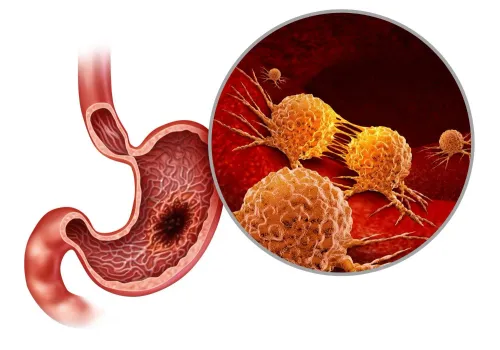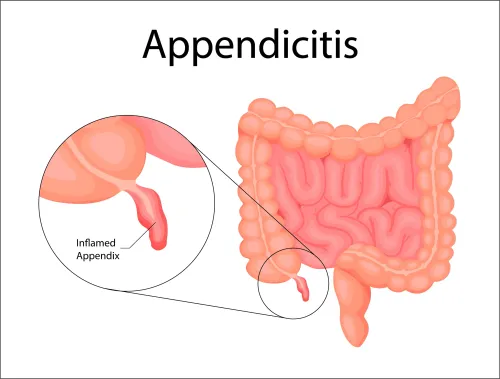
Gallstones, appendicitis, hernias, abscesses and soft-tissue lumps can produce similar abdominal or localized symptoms, but they do not all require an operation. By the end, you will know which findings lead to a surgical consultation, which procedures commonly treat each condition, when minimally invasive surgery is appropriate, and how to assess a hospital before treatment.
Key takeaways
- Seek a surgical review for persistent pain, obstruction signs, bleeding, or an abnormal scan.
- Laparoscopy usually means smaller incisions; open surgery suits complex disease or urgent bleeding.
- Robotic surgery improves instrument control but is not automatically safer for every operation.
- Choose observation, medication, endoscopy, or another specialist when surgery will not treat the cause.
Which symptoms and test results lead to a general surgery consultation?
A surgical consultation is prompted by a symptom pattern, an examination finding, or a test result that suggests a condition requiring intervention or specialist assessment.
| Finding | Common clues | Usual assessment |
|---|---|---|
| Gallstones | Right-upper-abdominal pain, nausea, or attacks after fatty food | Examination, liver-function blood tests and abdominal ultrasound; CT or magnetic resonance imaging if complications or bile-duct stones are suspected |
| Acute appendicitis | Right-lower-abdominal pain, fever, vomiting and a raised white-cell count | Abdominal examination, blood tests and ultrasound or computed tomography |
| Hernia | A groin bulge suggests an inguinal hernia; a navel or scar bulge suggests an umbilical or incisional hernia | Standing and coughing examination, with ultrasound or CT when the diagnosis or bowel involvement is unclear |
| Hemorrhoids or anal fissure | Rectal bleeding, itching or pain, especially during bowel movements | Inspection and digital examination; anoscopy, endoscopy or colonoscopy when bleeding needs another explanation |
| Pilonidal sinus or abscess | A painful midline buttock swelling, or a red, tender, fluctuant skin lump | Direct examination; blood tests and CT or ultrasound for deep, extensive or spreading infection |
| Lump needing tissue diagnosis | A slowly growing soft-tissue or thyroid lump | Ultrasound, magnetic resonance imaging, thyroid ultrasound and fine-needle aspiration when indicated |
Seek urgent assessment for severe or rapidly worsening pain, fever, repeated vomiting, abdominal distension, inability to pass stool or gas, a hard irreducible bulge, strangulation signs, or infection spreading beyond the skin. A slowly growing lump or recurrent symptoms usually allow a planned consultation.
Examination directs testing; imaging, endoscopy, colonoscopy and laboratory results confirm the suspected diagnosis rather than replacing clinical judgment.
Which common conditions are treated with an operation, and which procedures are used?
Recurrent biliary pain, acute cholecystitis or a gallstone complication usually leads to laparoscopic cholecystectomy, which removes the gallbladder. Incidentally found stones without symptoms usually need no operation.
| Condition | Typical operation | Important limit |
|---|---|---|
| Gallstones | Laparoscopic cholecystectomy | Symptom-free incidental stones usually do not require removal |
| Appendicitis | Laparoscopic or open appendectomy | Selected adults with imaging-confirmed uncomplicated disease may choose antibiotics, but recurrence remains a risk |
| Inguinal, umbilical or incisional hernia | Open, laparoscopic or robotic mesh hernia repair | The route depends on defect, prior operations, patient factors and trapped bowel; robotic repair is not automatically best |
| Abscess | Incision and drainage | Antibiotics alone do not replace drainage when pus is walled off |
| Lipoma or soft-tissue cyst | Excision | Remove it when painful, enlarging or requiring a diagnosis |
| Pilonidal sinus | Drainage or excision-based pilonidal procedure | The operation depends on recurrence and the extent of sinus disease |
| Hemorrhoids or anal fissure | Hemorrhoid procedure or fissure operation | Consider surgery after diet, medication and other conservative treatment fail |
A painful, irreducible hernia with vomiting or abdominal distension may be trapped or strangulated. Severe appendicitis with rigid abdominal pain, shock or signs of perforation needs emergency assessment, as does an abscess with spreading redness, high fever or sepsis. Antibiotics and urgent drainage may come before definitive surgery when infection is uncontrolled.
When is laparoscopy, open surgery or robotic surgery the safer choice?
The safer route depends on the anatomy, disease severity and the patient’s condition, not on whether an operation is marketed as minimally invasive. Minimally invasive laparoscopy suits many gallbladder removals, appendectomies and selected inguinal, umbilical or incisional hernia repairs.
| Option | Main strengths | When it fits and what to consider |
|---|---|---|
| Laparoscopy | Small incisions and usually less wound pain | Common for gallbladder removal and appendectomy; selected hernias also suit it. It is less suitable when anatomy is unclear or infection is extensive. |
| Open operation | Direct access and rapid control | May be safer with dense adhesions from previous operations, extensive infection, uncontrolled bleeding, organ invasion, uncertain anatomy, cancer-margin concerns or an unstable patient. |
| Robotic surgery | Surgeon-controlled wristed instruments and a three-dimensional view | May assist selected hernia, colorectal, pelvic and other complex operations. It is not autonomous treatment and offers no meaningful advantage for every straightforward procedure. |
A surgeon may convert laparoscopy to an open operation when continuing would risk injury, inadequate cancer margins or uncontrolled bleeding. Conversion is a safety decision, not proof of poor performance.
Robotic surgery also requires equipment access, trained staff and often a higher cost or longer operating time; those trade-offs matter when standard laparoscopy or open surgery can achieve the same result. A trapped or strangulated hernia, perforation or severe infection can change the safest plan during the operation.
When should medication, observation, endoscopy or another specialty come first?
A surgical consultation is a decision point, not a commitment to an operation. Observation, medication, endoscopy or another specialty may be safer when the condition is stable, the diagnosis is incomplete or surgery could create avoidable harm.
1. Observe symptom-free gallstones and selected uncomplicated hernias. Remove gallstones when they cause recurrent attacks or complications; repair a hernia when symptoms, enlargement or incarceration changes the risk. Antibiotics for appendicitis suit carefully selected adults with imaging-confirmed uncomplicated disease, but recurrence remains possible.
2. Control infection before definitive treatment. A fluctuant abscess usually needs incision and drainage; antibiotics are added for spreading cellulitis, systemic illness, immune suppression or specific high-risk locations. Operating through uncontrolled infection can worsen tissue damage.
3. Confirm reflux before anti-reflux surgery. Persistent heartburn alone does not prove gastroesophageal reflux. Before fundoplication or magnetic sphincter augmentation, use objective reflux testing, esophageal motility assessment and anatomic evaluation; surgery can cause dysphagia, gas-bloat symptoms or difficulty belching and vomiting.
4. Treat clinically severe obesity with bariatric surgery only after eligibility assessment. Many adults with a BMI of 35 kg/m² or higher qualify for consideration, while selected adults with a BMI of 30–34.9 kg/m² and metabolic disease may also qualify. Long-term nutritional monitoring and behavioral support are essential.
5. Stage suspected colon, rectal, gastric or pancreatic cancer before operating. Cross-sectional imaging, endoscopy, colonoscopy or biopsy, pathology and multidisciplinary review establish resectability and treatment order. Colon resection usually includes regional lymph nodes; rectal planning also depends on pelvic MRI, tumor height, mesorectal fascia and lymph nodes, which can determine preoperative treatment and stoma planning.
How can you compare a general surgery hospital before choosing treatment?
Choose the hospital that can manage the complication, not only perform the planned operation. Use this checklist:
| Hospital capability | Why it matters |
|---|---|
| 24-hour emergency capability | Covers sudden bleeding, obstruction, infection or severe pain |
| Continuous anesthesiology coverage | Supports urgent operations and postoperative deterioration |
| Intensive-care access | Provides escalation for breathing, circulation or organ problems |
| Ultrasound and CT availability | Speeds assessment of gallbladder, appendix, bowel and abscesses |
| MRI and endoscopy access | Supports selected cancer, pelvic, gastrointestinal and reflux evaluations |
| On-site pathology | Helps confirm tissue diagnosis and guide further treatment |
| Blood-bank support | Reduces delay when transfusion is needed |
| Structured postoperative monitoring | Detects infection, bleeding, ileus and respiratory problems early |
Ask who reviews your imaging and pathology, how complications are handled, and whether the surgeon explains open conversion, mesh, stoma risk, recurrence and nonoperative alternatives. Assess Sai Vedant Multi-Speciality Hospital against these concrete capabilities rather than the vague claim of modern infrastructure.
Ask about an Enhanced Recovery After Surgery pathway: preoperative counseling, no prolonged fasting, opioid-sparing pain control, early walking and oral feeding when safe. These measures can reduce complications and hospital time, but they do not guarantee rapid discharge.
Seek prompt review for worsening pain, fever, persistent vomiting, distension, inability to pass stool or gas, wound redness or drainage, breathlessness, chest pain or one-sided leg swelling.
Related services
General Surgeries General Surgery at Sai Vedant Multispeciality Hospital, Pune At Sai Vedant Multispeciality Hospital, Pune, our General Surgery department provides... View service → |
Complex GI & General Surgeries Complex GI & General Surgeries Complex GI & General Surgery at Sai Vedant Multispeciality Hospital, Pune Sai Vedant Multispeciality Hospital provides advanced gastrointestinal (GI)... View service → |
Frequently asked questions
Which symptoms and test results lead to a general surgery consultation?
Persistent or worsening abdominal pain, a growing lump, vomiting with distension, gastrointestinal bleeding, jaundice, unexplained weight loss, or abnormal ultrasound, CT, MRI, or endoscopy findings can prompt referral. Emergency symptoms such as severe pain, fainting, rigid abdomen, or inability to pass stool and gas need urgent assessment.
Which common conditions are treated with an operation?
General surgeons commonly treat gallstones causing recurrent symptoms, appendicitis, hernias, bowel obstruction, abscesses, anal conditions, thyroid lumps, and selected gastrointestinal or cancer conditions. Procedures include cholecystectomy, appendectomy, hernia repair, bowel resection, abscess drainage, and biopsy or cancer surgery.
When is laparoscopy, open surgery, or robotic surgery safer?
Laparoscopy suits many planned abdominal operations and uses small incisions. Open surgery gives faster access for major bleeding, extensive infection, large tumours, dense adhesions, or unstable patients. Robotic surgery can help with precise dissection in selected pelvic, gastrointestinal, and cancer operations, but surgeon experience, disease complexity, and patient safety matter more than the platform.
When should medication, observation, endoscopy, or another specialty come first?
Medication or observation can come first for conditions without obstruction, infection, tissue damage, or cancer requiring removal. Endoscopy is preferred for many problems inside the oesophagus, stomach, or colon. Urology, gynaecology, gastroenterology, oncology, or another specialty may be the better first referral when the suspected cause lies outside general surgery.
How can you compare a general surgery hospital before choosing treatment?
Ask who will perform the operation, how often they perform it, which technique fits your diagnosis, what alternatives exist, and what happens if complications occur. Check access to anaesthesia, intensive care, imaging, pathology, blood services, infection control, emergency care, and follow-up. Request a written estimate covering surgeon, hospital, anaesthesia, implants, medicines, tests, and possible overnight stays.