Pain during bowel movements, rectal bleeding, swelling, discharge, and persistent irritation are symptoms many people initially try to manage at home. While some conditions improve with medicines, dietary changes, and bowel-habit correction, persistent problems may require specialist assessment and sometimes Anorectal Surgery.
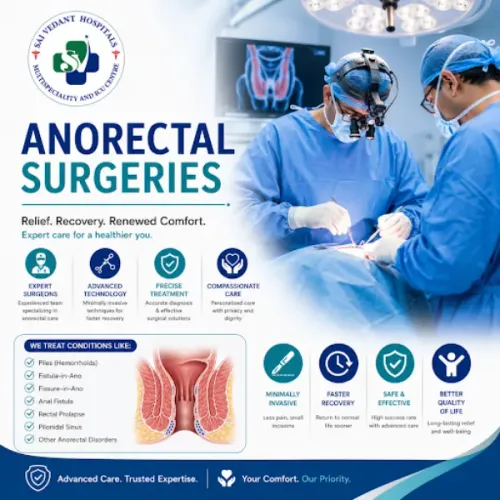
Common anorectal conditions include piles, anal fissures, fistulas, perianal abscesses, pilonidal sinus, and rectal prolapse. These conditions are different from one another, so treatment should begin with an accurate diagnosis.
Sai Vedant Multi-Speciality Hospital provides evaluation and surgical treatment for anorectal conditions in Pune.
Symptoms That Should Not Be Ignored
People frequently assume that any rectal bleeding means piles. That assumption can delay the diagnosis of another condition.
Medical evaluation is particularly important when there is:
- Recurrent rectal bleeding
- Persistent pain during bowel movements
- Swelling near the anus
- Pus-like discharge
- Recurrent abscess formation
- A wound that repeatedly drains
- A lump that does not settle
- Significant change in bowel habits
The cause needs to be established before deciding on treatment.
When Conservative Treatment May Be Enough
Some early haemorrhoids and anal fissures can improve with increased fibre intake, adequate hydration, stool-softening measures, appropriate medication, and correction of constipation.
However, the same approach is not suitable for every anorectal problem.
An anal fistula, for example, is an abnormal tract that usually requires a different treatment strategy from uncomplicated piles. Similarly, recurrent abscesses require evaluation for an underlying source.
When Surgery Enters the Discussion
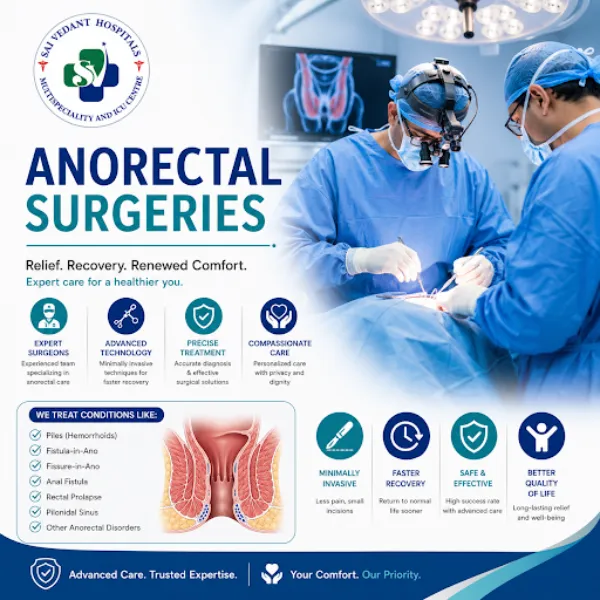
Surgical treatment may be considered when symptoms are severe, conservative treatment has not worked, disease keeps recurring, complications develop, or the underlying condition is unlikely to resolve without intervention.
Depending on the diagnosis, available procedures may include treatment for haemorrhoids, fissures, fistulas, pilonidal sinus, rectal prolapse, and perianal abscesses.
Minimally invasive and laser-based procedures may be suitable for selected anorectal conditions, but suitability depends on the exact diagnosis and disease anatomy.
What Patients Should Ask
Before agreeing to a procedure, understand:
- What exactly is causing the symptoms?
- Is non-surgical management still reasonable?
- What procedure is recommended?
- What anaesthesia will be used?
- How will pain be managed?
- When can normal bowel movements and activities resume?
- What changes can reduce recurrence risk?
These questions are particularly important for patients who have experienced repeated episodes.
Supporting Recovery
Postoperative care may include pain management, hygiene instructions, stool regulation, dietary modification, hydration, and scheduled follow-up.
Constipation prevention is especially important because straining can increase discomfort and interfere with recovery after some procedures.
Patients in Pune experiencing persistent anorectal symptoms can seek evaluation at Sai Vedant Multi-Speciality Hospital. Early assessment can clarify whether conservative management remains appropriate or whether a surgical approach should be considered.
Keywords